
Research Projects
The Global Politics of Big Tech (ongoing)
As the global political economy becomes increasingly organized around the control of knowledge, data, and intangibles, tech firms have divided much of the digital sphere among themselves - and the technical infrastructure that carries it. New players in the Big Tech ecosystem consist of rapidly rising ventures like SpaceX, OpenAI, and Palantir that open new markets to the sector’s activities. Defense and warfare are currently transformed by artificial intelligence and algorithmic decision-making.
In this project, me and my colleagues examine the political influence of large technology firms, its structural determinants, and its effects on politics. It comprises a Special Issue on The Global Politics of Big Tech that I am currently co-editing with Silvia Weko and Steven Rolf for Politics and Governance. The project builds strongly on my work on tech corporate power and geopolitics, in particular Private infrastructure in geopolitical conflicts: the case of Starlink and the war in Ukraine, published in European Journal of International Relations. It furthermore led to an op-ed for The Conversation on the apocalyptic worldviews of tech elites, which I co-authored with Juliana Tappe-Ortiz.
It furthermore features new research by Silvia Weko and me on the layering and personalization of infrastructural control in the cloud and AI defense sector (currently under review); and a collaboration with Jaša Veselinovič and Naná de Graaff on the Biotech sector.
EUInfra. Infrastructures of Globalization (2024-2027)
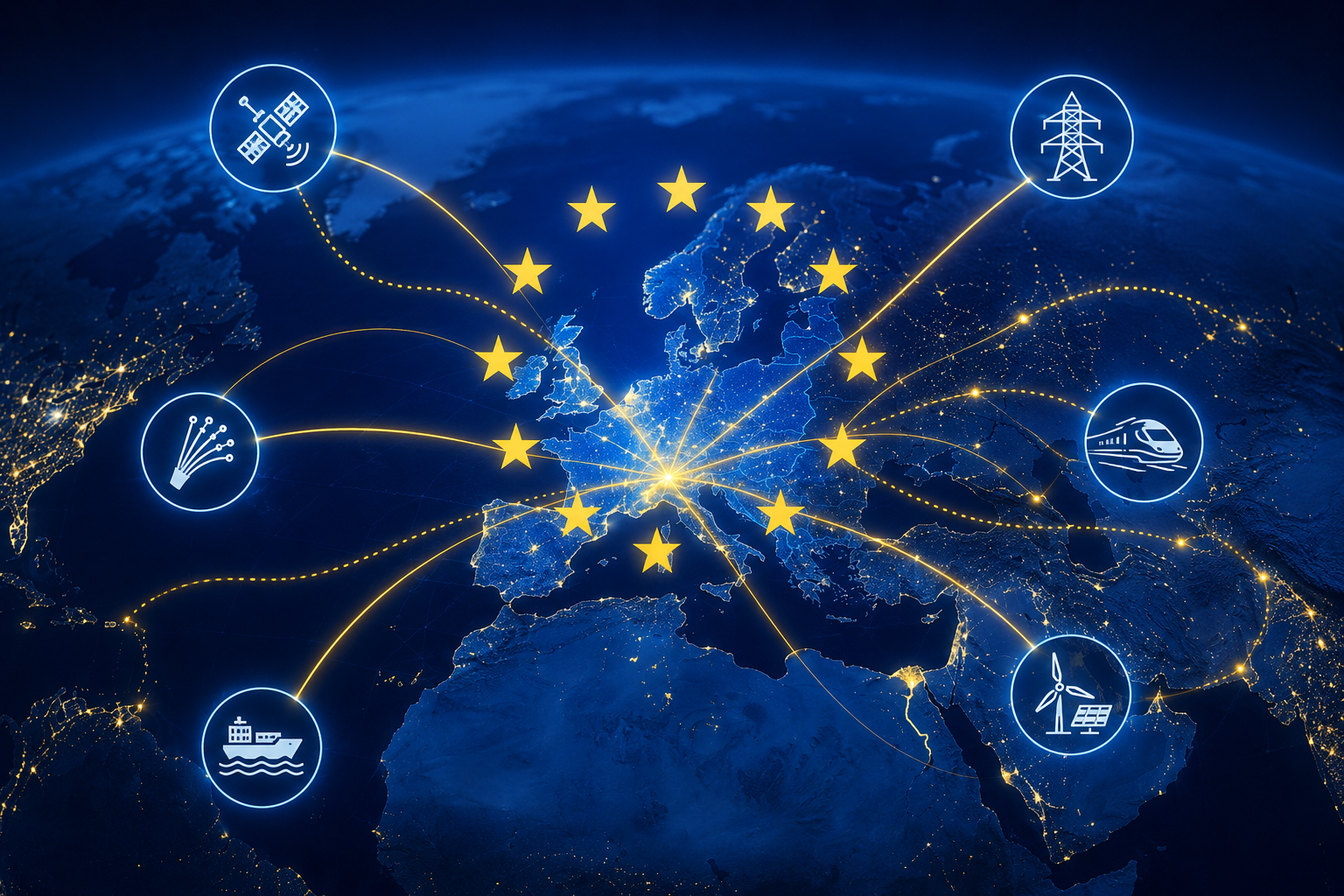
As the material basis of globalization, infrastructures are politically contested. In the new triad competition between the USA, China and the EU, infrastructures are being used to achieve geoeconomic and geopolitical goals, for example in the context of large-scale initiatives like the Belt and Road Initiative (China) or Global Gateway (EU).
The project Infrastructures of Globalization. EU Strategies in the Global Competition for Economic Expansion and Geoeconomic Control investigates the transformed, geoeconomically and geopolitically charged operation of infrastructures in the globalization process; and by shedding light on the specific role of the EU in this competition. For this, it focuses on three central infrastructure fields: data communication, energy, and transport. The project is funded by the German Research Foundation (DFG) under grant 526359979. It is carried out at the University of Tübingen, headed by myself and Hans-Jürgen Bieling.
Core outputs include a Special Issue on Transnational Infrastructures and Geoeconomic Competition for Globalizations, co-edited with Hans-Jürgen Bieling and Jan Ruck. The project builds on groundwork laid in Infrastructures of globalisation. Shifts in global order and Europe’s strategic choices, co-authored with Hans-Jürgen Bieling and published in Competition & Change.
It comprises publications on the EU’s technological sovereignty and the IRIS² satellite project (Journal of European Public Policy) as well as research on the political economy of subsea cable networks (Globalizations, with Milan Babic) and their geostrategic contestation (Global Policy).
Infrastructures and Global Ordering (IGLO) (2022-2024)
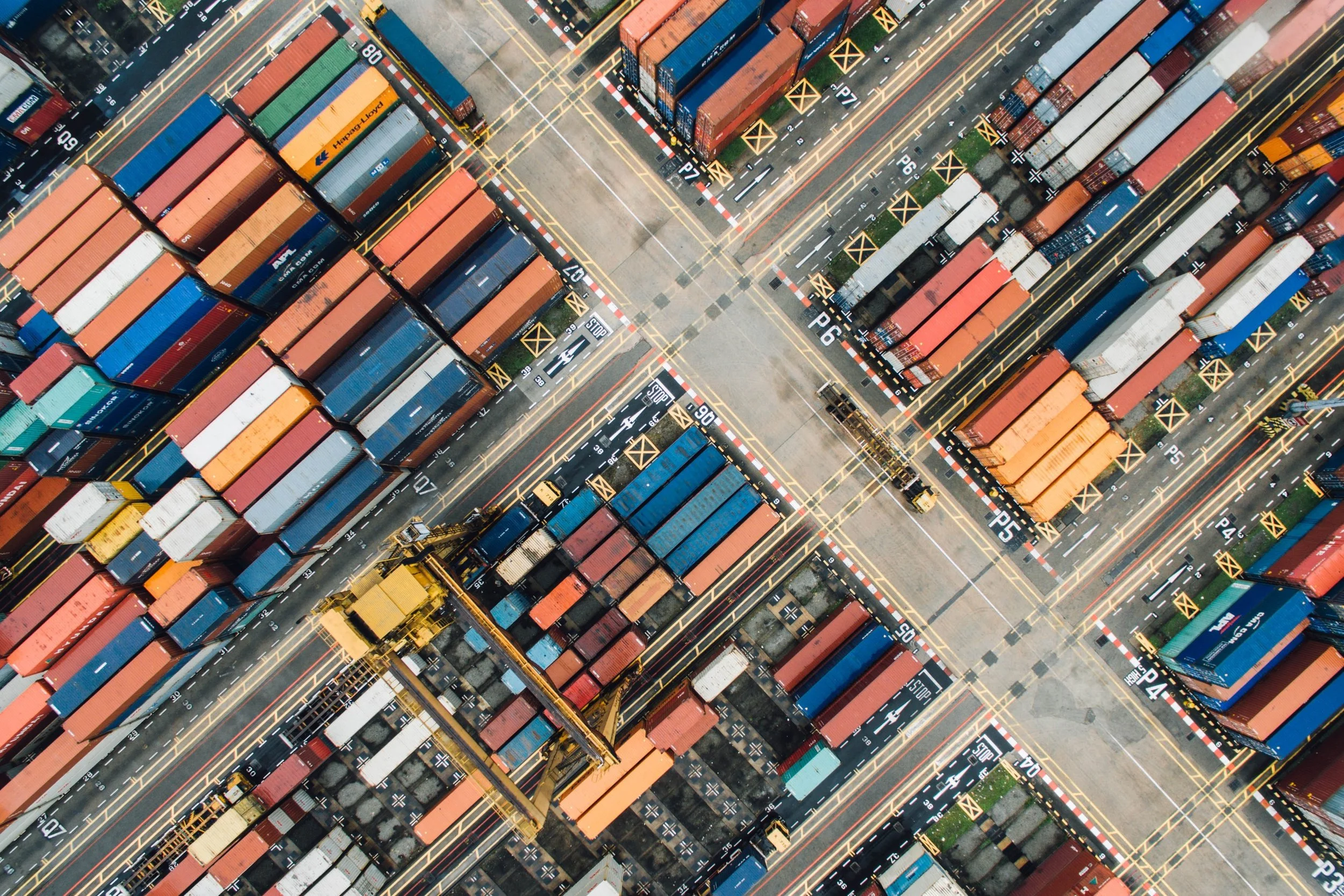
The way infrastructures are produced, operated and used are significant for global relations – and vice versa. In this project, we take an interdisciplinary approach to assess the influence of infrastructures on global order and the sustainable development of societies. Funded by the Excellence Strategy of the German federal government and the states, the project Infrastructures and Global Ordering (IGLO) - Linking Infrastructural Transformation to Changes in Global Relations and the Prospects of Sustainable Development establishes a research network on infrastructures at the University of Tübingen and lays the groundwork for transregional cooperation. I have previously been working as Project Coordinator for the project.
Core outputs include an article publication on the interplay of infrastructures and global order (International Political Sociology, with Hans-Jürgen Bieling, Riccarda Flemmer and Andrea Futterer).
The Politics of the Eurogroup (2016-2022)
The history of the European Union is a history of crises and the leaps of integration they triggered. As the pandemic, the war in Ukraine, and global power competition cloud the prospects of European economies, they find their options constrained by seminal path-dependencies of the euro crisis.
In my dissertation project A Finance Ministers’ Europe. The Eurogroup’s Role in Restructuring the Economic and Monetary Union, I examined why a political project of European austerity emerged from the Eurogroup and side-lined alternative policies, with repercussions still felt today. It fused a critical political economy perspective on structural relations in the Economic and Monetary Union with a power-based approach to its institutions.
The core output of the project is found in my book The Politics of the Eurogroup. Governing Crisis and Conflict in the European Union, published with Routledge’s RIPE Series in Global Political Economy. The book introduces a series of interviews with key decision-makers – ministers, central bankers, and EU officials – as well as leaked audio recordings from Eurogroup meetings to give an authentic report of the power struggles between finance ministers. It retraces how the Eurogroup rose to prominence in the crisis and how a few northern countries – led by the German and Dutch finance ministries – were able to exploit the group’s informal processes to shape the Economic and Monetary Union to their advantage.
Further publication that emerged from this project include Does the current crisis mark the end of the EU’s austerity era? Competing political projects in European fiscal governance, published in Comparative European Politics, as well as Failing forward in European economic governance. The cyclicality of European integration and institutional competition in the COVID-19 crisis, published with Journal of Common Market Studies.